
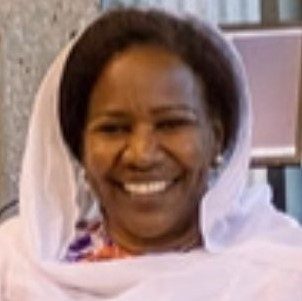
Jamila Hassan, Manager, Together for Better Life
I want to thank the Poverty Alliance team, particularly Isla and Alyson for their mobilising role to small charities like Together For Better Life (TFB). TFB is a charity based in Glasgow and supports people from Africa and the Middle East (majority Sudanese) to lead dignified lives in the UK.
We joined the ‘Scotland Demand Better’ campaign to highlight our community’s needs. This is crucial for having the right policies for the right people at the right scale. I want to mention some particular reasons for poverty in our community.
BMEs and Poverty in Scotland
The Scottish Government, in its efforts to combat poverty, identified six priority family groups, due to their increased risk of poverty (lone-parent families, families with three or more children, families with a child under one year old, families with a mother under 25, minority ethnic families, and families with a disabled member). However, these groups are not mutually exclusive. For example, our community is a cross-section of the six groups, and over-represented in three: families with three or more children, families with a child under one year old, and minority ethnic families. These features reinforce each other and increase the community’s vulnerability to multiple dimensions of poverty that place them in deep, persistent poverty.
Literature shows that Black and Minority Ethnic communities (in particular Arab and African) in Scotland are over-represented among socio-economically disadvantaged people, and their situation has been deteriorating over time. A study shows an increase in poverty from 29% in 2013-2016, which was 7% higher than the rate for children from a White-British household. This gap has been increasing ever since. For example, around 43% of children from a minority ethnic household were in relative poverty in 2020-2023, compared with 20% of children from a White-British household. Similarly, Poverty in Scotland 2024 report found that 53% of BME children live in relative poverty, more than double the average rate in Scotland. Kay & Price (2024) conclude that “migrants are disadvantaged in relation to each of the main pathways to poverty reduction recognised by Scottish Government and Scotland’s wider antipoverty movement: reducing costs; increasing incomes through employment; and increasing awareness and uptake of social security entitlements’.
Amy Rich (2023) explains that despite multiple Scottish Government anti-poverty commitments, BME child poverty persists because the needs of those children and their families was not considered in the anti-poverty measures. She argues that very little is being done to tackle the disproportionately high rate of child poverty amongst BME families, though they are one of six priority groups that anti-poverty actions should be targeted at. This finding is confirmed by Kay & Price (2024), who state that migrants’ needs are too often overlooked or treated as niche and are not well-met by the existing landscape of support and service provision.” (Kay & Price 2024)4.
Their research finds clear evidence of migrants’ vulnerability to poverty and exclusion from anti-poverty measures. Besides, they face significant costs not incurred by other low-income households, including visa fees, immigration health surcharge, and some have no recourse to public funds. In addition, Migrants face specific barriers in the labour market, including non-recognition of overseas qualifications; undervaluing of work experience and skills development gained outside of the UK; costs of addressing language barriers; and discrimination on the grounds of race or religion.
In my view, our community needs are overlooked because there is a lack of knowledge about these needs. Arabic-speaking people are often skipped in research. Maybe because of the language barrier, or our community is not familiar with research and doesn’t know its importance. For example, recently released statistics show households of only two ethnic groups (White and Asian) who affected by the two-child limit policy in 2024, after exclusion of the 17% households that opted not to identify their ethnic groups. I explored the data set (see the accompanying data tables) to learn about our community, but I couldn’t identify them, because I am not sure if they are considered African or Arab! Sudanese ethnically are a hybrid between African and Arab, but culturally are more Arab. Hence, there is a need for in-depth research to find the needs of our community.
Research by Migration Policy Scotland provides new information about our experience in the labour market. But through our work experience, particularly the Advocacy project, we touch on other needs that are not considered in the policies. I consider here the two most important challenges that are considered essential human rights:
Education:
Education is the most essential asset for human beings to lead a rewarding life. Therefore, the focus on the education of children is an essential departure point to combat poverty. It will contribute to the mitigation of current child poverty and future overall poverty. Our experience shows that migrant children are placed in classes according to their age, without consideration of their academic or language levels. A few affluent families provide extra support to their children; the majority could not. Therefore, the children lose their ambition for education. If they couldn’t cope with the education, they would repeat their parents' experience and fall into the social security abyss. Therefore, I suggest schools should consider extra support for this category, because it is not fair to be treated equally to the mainstream children.
Housing:
Adequate housing is one of the human rights. In Scotland current focus is on the Rent Bill. Yet, our community experience more serious issues than the high rent. Research conducted by Roma people in Glasgow shows how they have been denied their right to adequate housing, as they live in shocking conditions, including damp, mould, and pest infestations. Our experience adds the overcrowding issue that reaches up to four persons per room. Overcrowding alone is enough to cause serious physical and mental health issues. Besides stigma and social isolation, some children avoid making friends because they can’t invite them home to visit. Not least, the situation might also contribute to domestic violence.
To conclude, there is a need for case studies carried out by communities to highlight their specific needs that prevent them from being trapped in persistent poverty.
Enter your email address to receive regular e-updates about our work. If at any time you want to stop receiving these, simply contact us. We’ll keep your details safe and won’t share them with any other organisations for their marketing purposes. For full details see our Privacy Policy.